
A1 German GrammarCommon Verbs (sein, haben)
Master the two most essential German verbs: sein (to be) and haben (to have). These irregular verbs appear in nearly every sentence and are the foundation of German grammar.
Practice in interactive stories
With instant translation and audio

1The Verb 'sein' (to be)
Sein is the German verb for 'to be'. It is completely irregular and must be memorized. It is used to describe states, professions, nationalities, and characteristics.
Conjugation of sein
| Pronoun | sein | English |
|---|---|---|
| ich | bin | I am |
| du | bist | you are (informal) |
| er/sie/es | ist | he/she/it is |
| wir | sind | we are |
| ihr | seid | you are (plural) |
| sie/Sie | sind | they are / you are (formal) |
Examples
Ich bin Student.
I am a student.
No article before professions
Du bist sehr nett.
You are very nice.
Describing characteristics
Sie ist Ärztin.
She is a doctor.
Feminine profession form
Wir sind aus Deutschland.
We are from Germany.
Expressing origin
2The Verb 'haben' (to have)
Haben is the German verb for 'to have'. It is also irregular but follows a clearer pattern. Haben is used for possession, age, and many fixed expressions.
Conjugation of haben
| Pronoun | haben | English |
|---|---|---|
| ich | habe | I have |
| du | hast | you have (informal) |
| er/sie/es | hat | he/she/it has |
| wir | haben | we have |
| ihr | habt | you have (plural) |
| sie/Sie | haben | they have / you have (formal) |
Examples
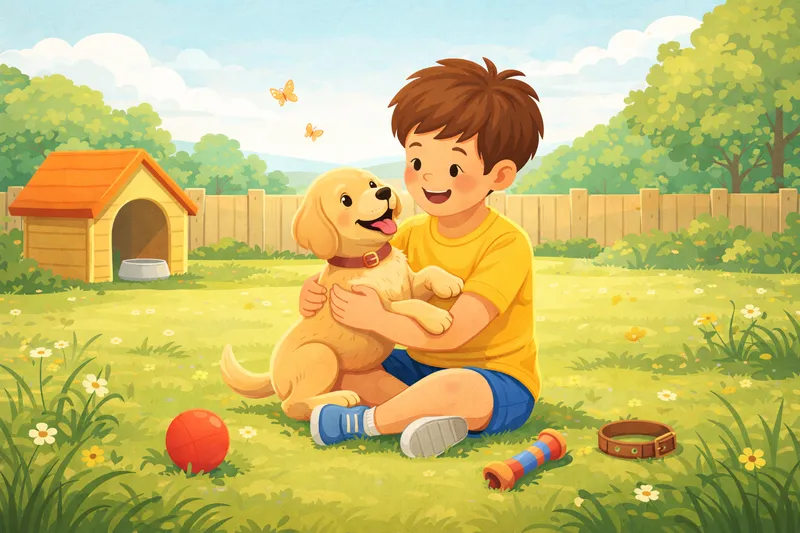
Ich habe einen Hund.
I have a dog.
Expressing possession
Hast du Zeit?
Do you have time?
Common question
Er hat zwei Kinder.
He has two children.
Family relations
Wir haben Hunger.
We are hungry.
Literally: We have hunger
3Common Expressions with sein
Sein is used in many everyday expressions. Unlike English, German often uses sein where English might use other verbs. Learn these common patterns.
Expressions with sein
| German | English | Usage |
|---|---|---|
| Es ist kalt. | It is cold. | Weather |
| Ich bin müde. | I am tired. | State/feeling |
| Das ist schön. | That is nice. | Evaluation |
| Wo bist du? | Where are you? | Location |
Examples
Wie alt bist du?
How old are you?
Age uses sein in German
Ich bin 25 Jahre alt.
I am 25 years old.
Stating your age
Das ist mein Bruder.
That is my brother.
Introducing people
Es ist acht Uhr.
It is eight o'clock.
Telling time
4Common Expressions with haben
Haben appears in many fixed expressions where English uses 'to be'. This includes expressing feelings, needs, and physical states. These must be learned as set phrases.
Expressions with haben
| German | Literal | English Meaning |
|---|---|---|
| Hunger haben | to have hunger | to be hungry |
| Durst haben | to have thirst | to be thirsty |
| Angst haben | to have fear | to be afraid |
| Recht haben | to have right | to be right |
Examples
Ich habe Durst.
I am thirsty.
Literally: I have thirst
Sie hat Angst vor Hunden.
She is afraid of dogs.
Angst haben vor = afraid of
Du hast Recht!
You are right!
Agreeing with someone
Habt ihr Lust auf Kino?
Do you feel like going to the cinema?
Lust haben = to feel like
Practice Exercises
3 exercises
Complete: 'Er ___ Student.' (He is a student.)
Complete: 'Ich ___ Hunger.' (I am hungry.) - literally 'I have hunger'
Complete: 'Sie ___ 25 Jahre alt.' (She is 25 years old.)
See Real Examples in Stories
Now that you've practiced, see this grammar in context
Practice with A1 Stories
Apply what you learned in interactive stories with instant translations.
Browse A1 Stories